

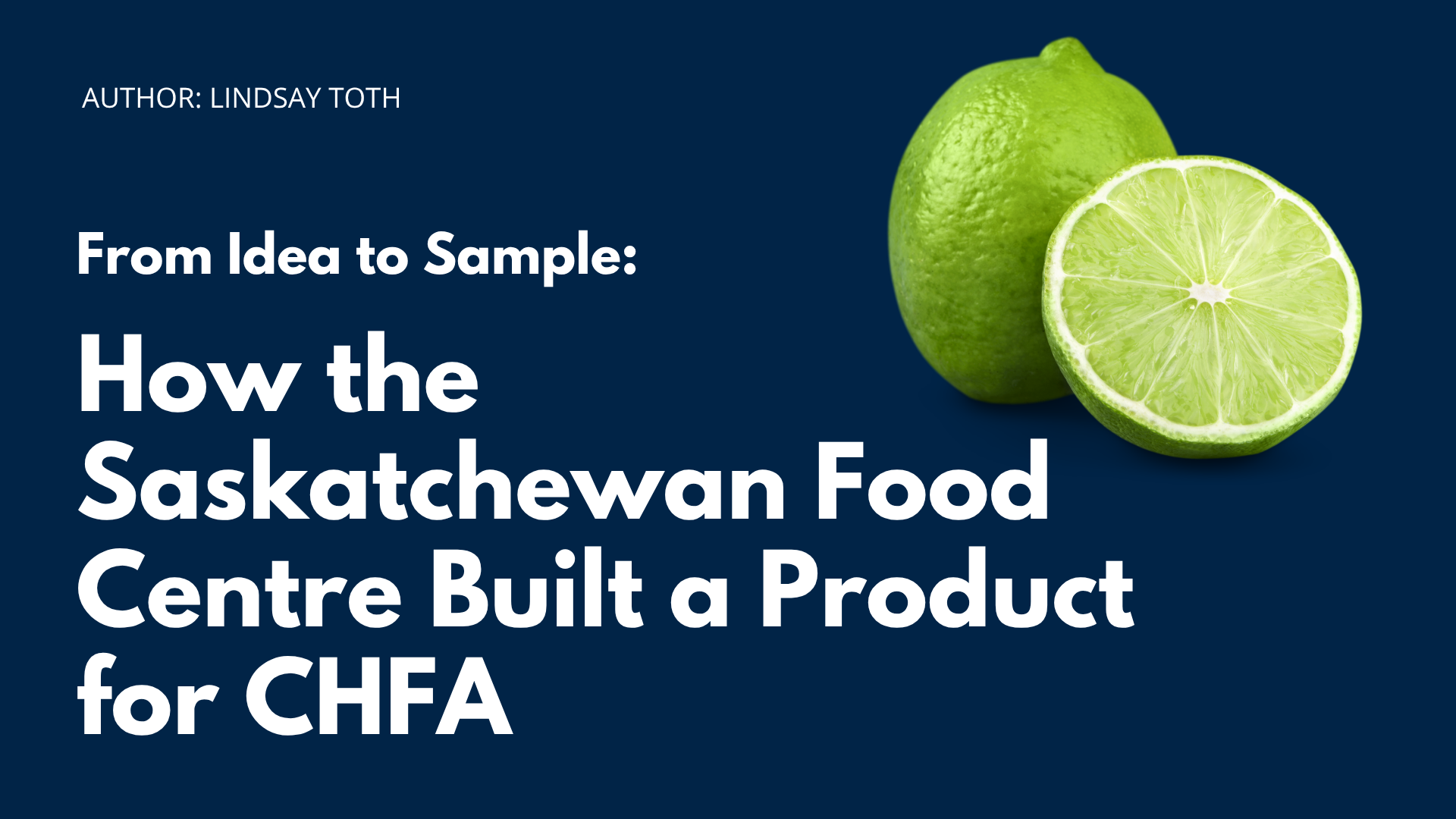
From Idea to Sample: How the Saskatchewan Food Centre Built a Product for CHFA
By: Lindsay Toth
What does it actually take to turn a food product idea into something you can hold in your hand?
For CHFA NOW, the Saskatchewan Food Industry Development Centre decided to show that process rather than simply talk about it. The team developed a product specifically for the event, taking it from an initial idea through formulation, sensory testing, processing, packaging, and eventually a finished sample.
The result was Berry Lime Boost, a single-serve powdered drink mix created to showcase some of the Food Centre's product development and processing capabilities. CHFA Drink Mix
The finished sachet looks relatively simple. The process behind it was anything but.
Starting With What the Industry Is Asking For
The idea for Berry Lime Boost came from a combination of industry trends and what the team thought would resonate with the CHFA audience.
The Food Centre receives a lot of inquiries about sachet drink mixes, so developing one for CHFA created an opportunity to demonstrate those capabilities with a product of its own. With the natural, organic, and wellness focus of the show in mind, the team began developing a health-forward concept that could work as a shelf-stable, convenient, single-serve product.
Development started in June, and because the team had a fairly clear direction from the beginning, the process moved quickly. By July, the formulation was finalized, and the finished product was packaged in August.
A typical client project would generally take longer. In this case, having a clear concept and a good sense of the ingredients they wanted to work with helped move things along.
Figuring Out What Belonged in the Product
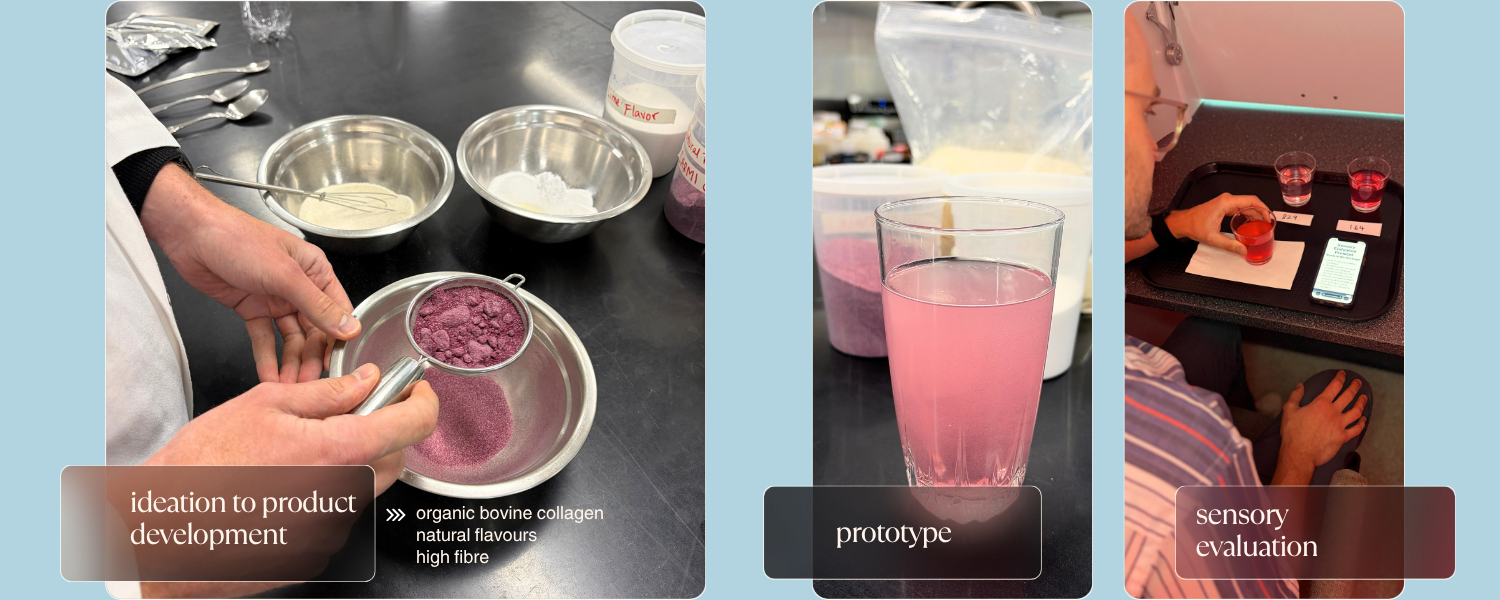
Fibre was selected because it is a growing area of interest and something the Food Centre has been seeing more often in inquiries and new product concepts. Collagen was also a natural fit. It added a protein component while connecting to the beauty, wellness, and joint and mobility categories that are common at CHFA. Bioriginal generously donated the collagen used in the project, which also helped shape the direction of the finished product.
The team worked with organic bovine collagen, natural flavours, and fibre as the formulation came together.
Interestingly, the original idea included more than what ended up in the final product. Early formulations also included electrolytes for hydration and magnesium positioned around calm.
The team eventually realized they were trying to make the product do too many things at once. There were a lot of potential benefits to communicate, but putting all of them together made the overall concept harder to understand. The decision was made to simplify the formulation and focus on collagen and fibre instead.
That decision is an interesting part of the development story because it shows that creating a product is not always about adding more. Sometimes the better decision is figuring out what the product does not need.
The Sensory Panel Changed the Product
Once the team had a prototype, they put it through a formal sensory evaluation. This ended up having a significant impact on the final flavour.
The response to the original version was very mixed. Some people loved it. Others thought it tasted like, in their words, "dirty socks."
That is probably not the feedback anyone hopes to receive during product development, but it is also exactly the kind of thing you want to learn before a product gets any further.
Based on the sensory feedback, the team went back to the formulation and added raspberry flavouring. That helped balance the flavour and create something that appealed to a broader group of tasters.
It is also a good example of why outside feedback matters. When you have been involved in developing a product from the beginning, you know what it is supposed to be and what you are trying to achieve. Someone tasting it for the first time does not have any of that context. Their experience can be very different from yours.
Without the sensory panel, the team might not have realized how differently people were responding to that first version.
From Formula to Finished Sachet
Once the formulation was finalized, the next step was turning the drink mix into an actual product that could be handed out at CHFA.
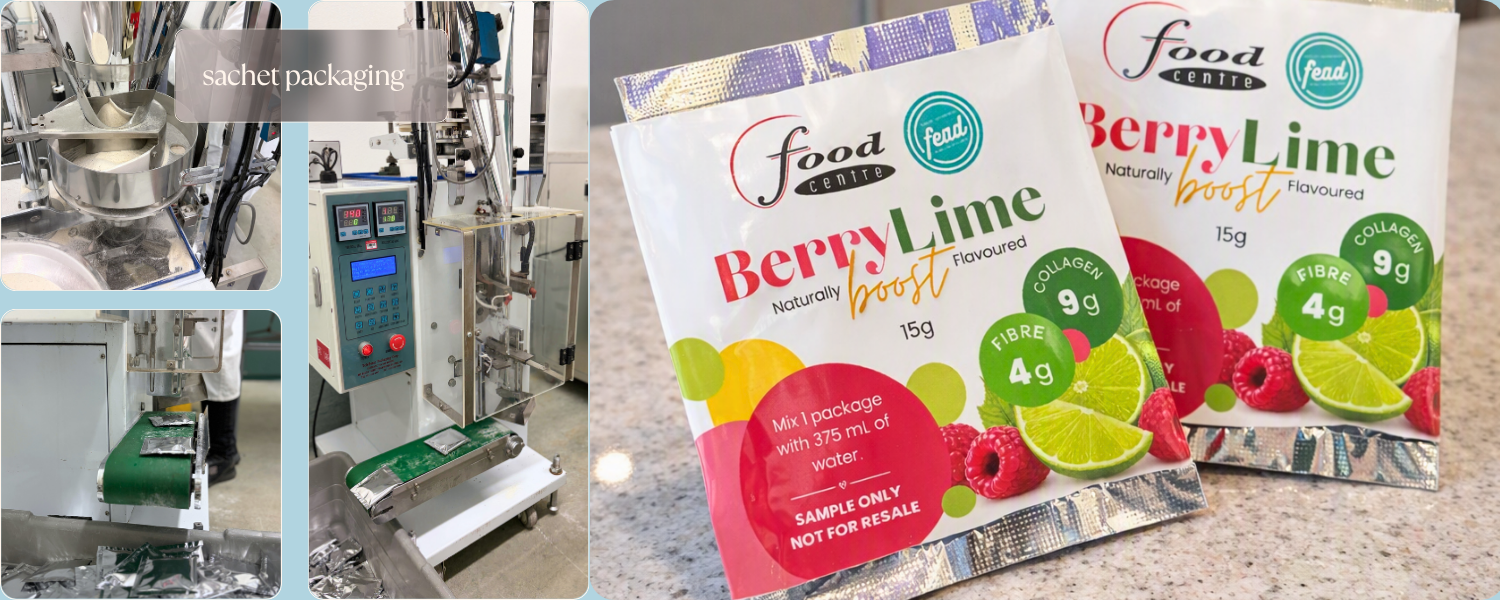
The team used processing equipment at the Food Centre to package the powdered mix into individual sachets. CHFA Drink Mix The single-serve format made sense for the event, but it also allowed the Food Centre to demonstrate the sachet capabilities that had been generating interest from industry.
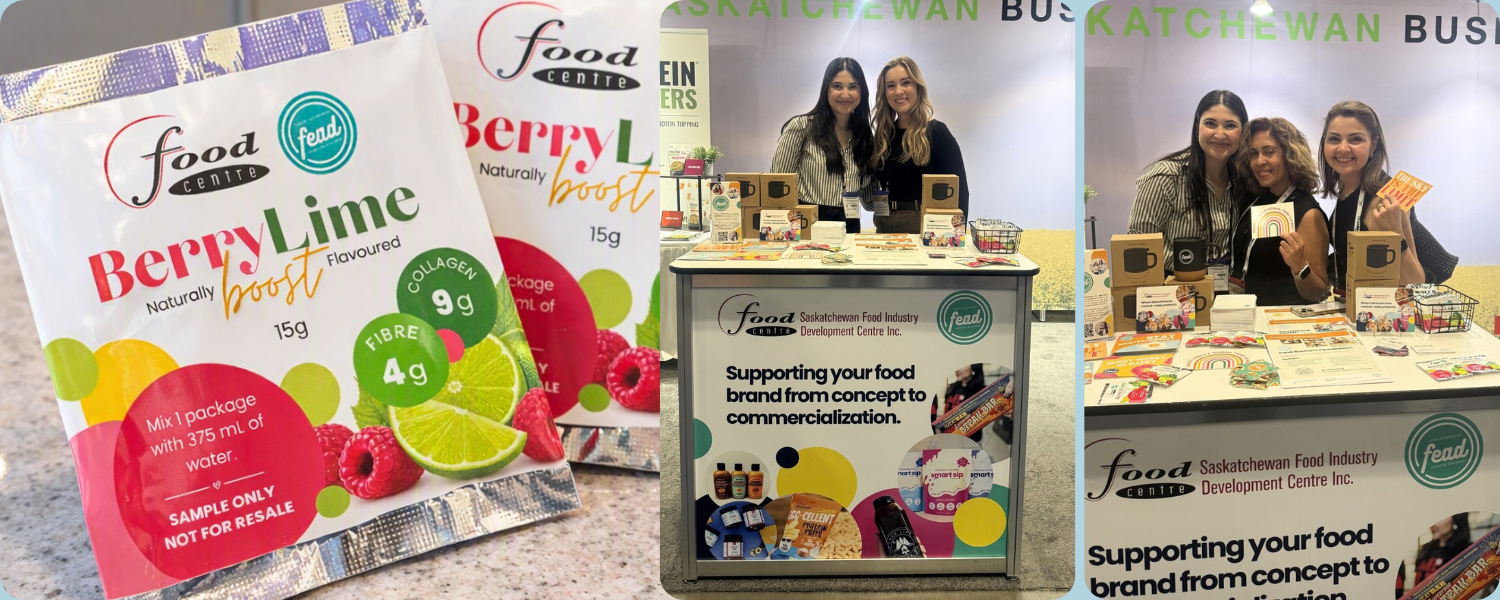
The finished product was designed to be shelf stable and convenient, with an eye-catching label that communicated the main product benefits clearly.
By the time someone at CHFA picked up a Berry Lime Boost sachet, most of the work that had gone into it was invisible. They saw the finished package. Behind it were months of decisions about trends, ingredients, functionality, flavour, sourcing, testing, processing, messaging, and packaging.
More Than One Team Was Behind It
One of the more interesting parts of the project was how many areas of the Food Centre were involved.
Business development brought insight into what the industry was asking for and the trends the team was seeing. Product development worked through the formulation, functionality, flavour, and sensory testing. Processing staff helped take the finalized formula and turn it into the finished sachets. FEAD contributed to the marketing side of the project and how the finished product would be communicated.
That collaboration is a pretty accurate reflection of what happens behind many of the food products we eventually see on store shelves.
A food business may begin with a great recipe, but commercialization brings in a much wider range of considerations. The formulation has to work. The flavour has to appeal to customers. Ingredients have to be sourced. The product has to be processed and packaged. The positioning has to make sense, and customers need to quickly understand what they are looking at.
All of those pieces eventually have to work together.
What Berry Lime Boost Shows About Product Development
Berry Lime Boost moved from an initial concept in June to a finished product in August, but there were plenty of decisions packed into those few months.
The team started by looking at what was happening in the industry and what would make sense for CHFA. They developed a concept, chose ingredients, simplified the original formulation, created prototypes, tested the flavour, made changes based on sensory feedback, finalized the product, processed it, and packaged it for the show.
That process will look different for every food business. Some products start with a family recipe. Others begin with a gap a founder notices in the market, a new ingredient, a customer problem, or an idea that has been sitting in a notebook for years.
What happens after that initial idea is where product development becomes much more complex.
Moving toward commercialization can involve formulation, food safety, sensory evaluation, shelf life, processing, sourcing, packaging, labelling, production, and eventually figuring out how to scale. Those are very different questions from simply asking whether something tastes good.
Facilities like the Saskatchewan Food Centre help businesses work through that process by bringing product development expertise and food-processing infrastructure together.
Berry Lime Boost is a small example of what that can look like. The final product was one sachet that could be mixed with water and enjoyed at CHFA. Behind that sachet were people from across the Food Centre working through all the decisions required to get it there.
The finished package may be the part everyone sees, but there is a lot that happens before a food product ever gets into someone's hands.

