

What Scaling a Food Business Actually Looks Like: Inside Our Recipe to Scale Accelerator
By: Lindsay Toth
There’s a lot of conversation about scaling food businesses.
More sales. More exposure. More distribution.
But behind that growth is a different reality. One that is less visible, and often more complex.
Scaling a food business is not just about demand. It is about building the systems that can support it.
Right now, inside our Recipe to Scale Accelerator, founders from across Canada are working through what that actually means. They are navigating production, pricing, packaging, and distribution. They are figuring out how to maintain quality while building businesses that can grow.
This is what that work looks like.
The Founders Behind the Work
This cohort represents a wide range of products, stages, and stories. What connects them is not what they make. It is what they are building toward.
Building Products From Real Needs
Some of the strongest businesses start from a personal problem.
Bhalla Protein
http://www.bhallaprotein.com
Prabha built Bhalla Protein out of frustration with the lack of protein snacks that were both nutritious and enjoyable. What started in her kitchen is now a growing brand focused on everyday, better-for-you products that do not feel restrictive.
Smart Sip Cream Co.
http://smartsipcreamco.com
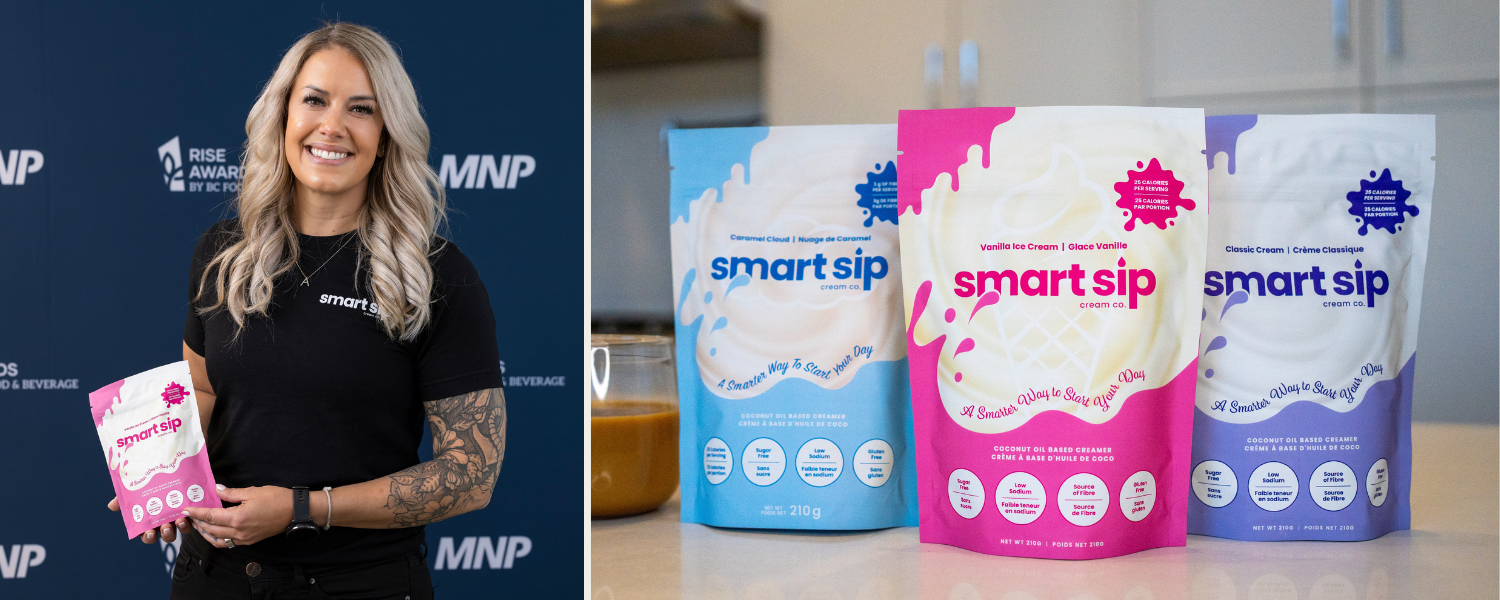
Ashlyn created Smart Sip after years of coaching clients through weight loss and experiencing it herself. The result is a fibre-rich, low-calorie creamer that allows people to keep the foods they enjoy while supporting their health goals.
Fancycuppa
http://www.fancycuppa.com
Kati’s journey started with a simple frustration. She wanted a high-quality decaf coffee that didn’t compromise on taste or disrupt sleep. Today, Fancycuppa is built around coffee designed for winding down, not just powering up.
JUST THE TEA
http://justthetea.ca
Amy built Just the Tea to create healthier alternatives to sugary drinks and coffee. What began at her kitchen table has grown into a brand focused on simple, everyday wellness for families.
Ashlyn Newlove
Scaling Culture, Identity, and Community
For many founders, food is more than a product. It is a connection to culture, history, and identity.
Sabrosa Fusion
http://www.sabrosafusion.ca
Mery built Sabrosa Fusion from recipes passed down through generations. After immigrating to Canada and building a culinary career, she turned family recipes into scalable products designed for modern kitchens while staying rooted in Peruvian tradition.
Infused Mediterranean Foods
https://www.infusedmediterraneanfoods.ca
Ruba combines her Palestinian heritage with professional culinary training to create preservative-free Mediterranean foods made in Alberta. Alongside building her business, she actively mentors other entrepreneurs and supports the broader food community.
Topsie Crunchies Snacks Inc
http://www.topsiecrunchiessnacks.com
Topsie Crunchies is introducing chinchin, a West African snack, to Canadian consumers. What started as small-scale production during the pandemic has grown into retail placements and a clear vision to bring cultural foods into everyday snacking.
Mnopgwad Preserves
http://mnopgwad.com
Small-batch preserves rooted in Indigenous knowledge, seasonality, and connection to land.
La Casita Kitchen
http://www.lacasitakitchen.ca
Authentic Latin-inspired foods bringing comfort, culture, and bold flavour to everyday meals.
Ariya Burmese Foods
http://www.ariyaburmesefoods.com
Traditional Burmese recipes crafted to introduce rich, authentic flavours to new markets.
These businesses are not just scaling products. They are scaling culture and representation within Canada’s food system.
From Craft to Scalable Business
Many founders are navigating the shift from hands-on production to structured growth.
Fume-eh Gourmet
http://fumeeh.com
For Paula, Fume-eh started with a single moment of inspiration after tasting smoked olives. Years of experimentation turned that moment into a growing brand, now supported by a family-run operation and a clear commitment to quality.
Rich & Robbi Shortbread
http://richandrobbi.com
Melissa transitioned from a 25-year corporate retail career to build a premium shortbread company rooted in a family recipe from the 1950s. What began at farmers’ markets is now expanding into specialty retail and gifting.
SirGora
http://sirgora.ca
Svitlana brings deep technical expertise in cheesemaking and scaling production. After building a creamery in Ukraine, she is now introducing a new product category in Canada with cheese-infused chocolate truffles designed for premium markets.
Onie Granola
http://onie.ca
Clean, ingredient-driven granola built for simple, everyday nourishment.
Wadi Protein Treats
http://waditreats.com
Better-for-you treats designed to make protein feel like an indulgence, not a compromise.

Odutope Macauley-Okoro
Building Toward Retail and Growth
Some founders are already in market and preparing for what comes next.
Greens & Beans
https://greensandbeans.ca
Natasha brings decades of global experience into her business, combining strategic growth expertise with a focus on nutrient-dense, family-friendly food products.
The Chai Wallahs
http://www.thechaiwallahs.com
Jodi’s journey reflects both growth and resilience. What began as a shared passion evolved into a business rooted in tradition, community, and legacy.
Canto Hot Sauce
http://www.cantohotsauce.com
Cate brings together art, agriculture, and flavour through small-batch hot sauces made from locally grown ingredients.
Trust Me Aunty
http://www.trustmeaunty.ca
Bold, culturally inspired flavours designed to bring comfort and nostalgia into modern kitchens.
Your Farmer’s Wife
http://yourfarmerswife.ca
Farm-rooted products that connect consumers to local ingredients and prairie-grown food.
Prairie Pantry
https://www.facebook.com/PrairiePantryCoffee/
Artisanal pantry staples inspired by prairie ingredients and small-batch production.
Each of these businesses is navigating the same question in different ways. What does it take to grow without losing what makes your product work in the first place?

Svitlana Martynenka
What They’re Actually Working Through
While every founder is different, the challenges are consistent:
Moving from small batch to scalable production
Understanding margins and pricing for retail
Choosing packaging that works beyond local markets
Navigating food safety and compliance
Building distribution strategies that support growth
This is the work behind scaling. It is not always visible, but it is what determines whether a business can grow sustainably.
Scaling Is Not Just Growth. It Is Structure.
There is a tendency to think of scaling as more.
In reality, scaling is about structure.
It is about building systems that can support demand without breaking. It is about making decisions early that will still work when the business is ten times the size.
That is the work happening inside this accelerator.
Looking Ahead
This cohort reflects something bigger than individual businesses.
It reflects where the food industry is going.
More local production. More culturally rooted products. More founders building businesses with intention.
We are excited to be working alongside these entrepreneurs as they build what comes next.

